
By Michael Phillips, with insights from Bruce Eden
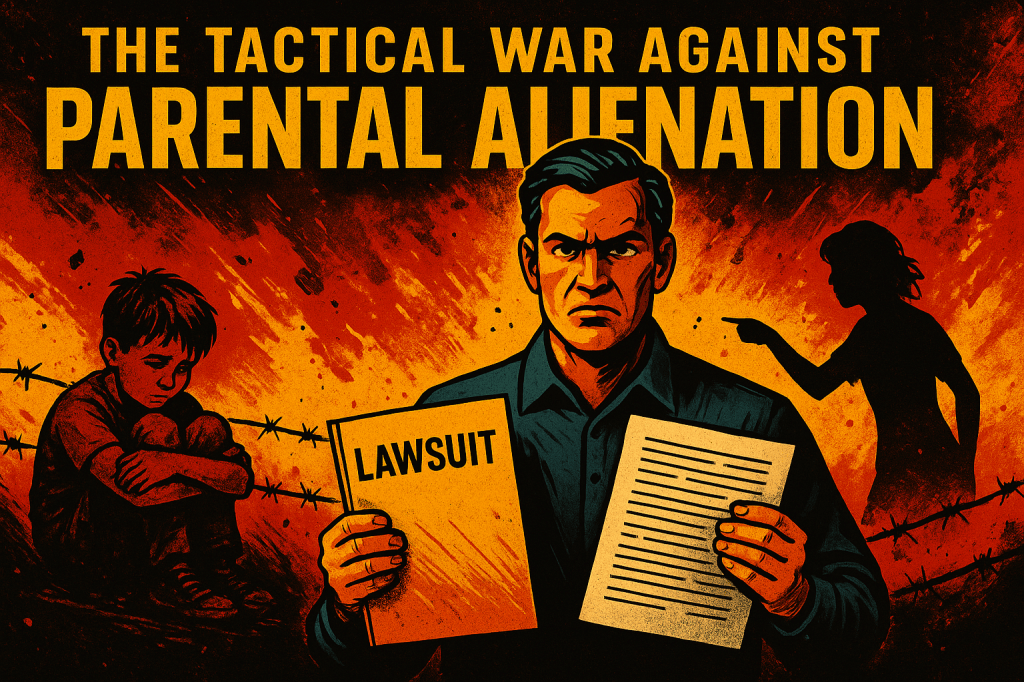
Parental alienation isn’t just painful—it’s a silent epidemic, often ignored by family courts, dismissed by therapists, and rarely prosecuted despite clear patterns of abuse. Fathers (and mothers) across the country suffer in silence as court orders for parenting time are violated repeatedly, with no consequence for the offending parent.
But what if there was a way to fight back? What if there was a clear, strategic, and legally grounded path that could hold alienating parents—and the system that enables them—accountable?
Advocate Bruce Eden has outlined just such a path. And it’s not just theory—it’s backed by real case law, DSM-5 diagnostic criteria, and a growing record of successful civil lawsuits.
This isn’t about revenge. It’s about justice. It’s about reclaiming your constitutional right to be a parent. And it starts with building a case like you’re preparing for war.
Step 1: Get Mental Health Treatment Immediately
If your parenting time has been violated repeatedly—10 times or more, or over an extended period—it’s not just frustrating. It’s traumatic. And that trauma is real.
You should immediately seek treatment from a licensed psychiatrist, psychologist, or psychotherapist (not just an MSW or counselor). Tell them what’s happening and get evaluated for Post-Traumatic Stress Disorder (PTSD) stemming from the loss of your child-parent relationship.
Why is this so important? Because documented trauma becomes evidence—evidence of harm caused by the other parent’s intentional actions, and by a system that has failed to protect your relationship with your child.
Step 2: Document Everything—Every Missed Visit, Every Violation
Keep a detailed diary or spreadsheet that includes:
- The date and time of each missed or interfered-with visit
- A brief summary of what happened
- A reference to the specific court order that was violated (e.g. “Per Order dated Jan 12, 2024, page 3, line 4”)
- Any communication from the other parent justifying or denying the time
- Screenshots, texts, emails, voicemails—keep it all
The more you can show a pattern of willful interference, the stronger your case.
Step 3: Build the Medical-Legal File
Once you’ve completed multiple therapy sessions and have documented your trauma and the violations:
- Ask your clinician for written reports or diagnoses
- Collect all court orders, including final judgments and enforcement rulings
- Get copies of denied motions, parenting plans, and communications
- Organize all this in a binder or secure digital file
Now you’re not just a parent complaining. You’re a litigant with a trail of civil rights violations and emotional harm backed by medical records and legal documents.
Step 4: File a Lawsuit—Yes, a Civil Lawsuit
Here’s where Bruce Eden’s strategy gets bold: treat parental alienation like a personal injury case.
Hire an attorney (or go pro se if you’re legally capable) and file a lawsuit in civil court—not family court—alleging:
- Intentional infliction of emotional distress
- Negligent infliction of emotional distress
- Custody interference / parenting time interference
- Fraud (for repeated violation of court orders)
- Violation of liberty interests under constitutional protections
Demand a jury trial. Many judges in family court systems are desensitized or politically influenced, but civil juries—especially when shown the emotional toll and evidence of alienation—get it. Some verdicts have gone into the millions.
Landmark Cases That Support This Strategy
Eden cites several powerful precedents:
- Raftery v. Scott, 756 F.2d 335 (4th Cir. 1985):
A federal court upheld a $50,000 damages award for parental alienation and child concealment. - Smith v. Smith, 720 S.W.2d 586 (Tex. Ct. App. 1986):
A Texas jury awarded $53 million for visitation interference. - Weirich v. Weirich, 796 S.W.2d 513 (Tex. Ct. App. 1990):
$5.95 million awarded for child abduction with help from grandparents. Upheld by the Texas Supreme Court. - McIntyre v. McIntyre, 771 F.2d 1316 (9th Cir. 1985)
- Stone v. Wall, 135 F.3d 1438 (11th Cir. 1998)
- Drewes v. Ilnicki, 863 F.2d 469 (6th Cir. 1988)
These are not just moral wins—they are legal blueprints showing that courts can, and sometimes do, take these violations seriously.
What About the DSM-5? Yes, It Helps
Although the term “Parental Alienation” was not formally added to the DSM-5, the symptoms and diagnostic equivalents are there:
- Child Psychological Abuse
- Child Affected by Parental Relationship Distress
- Parent-Child Relational Problem
- Factitious Disorder Imposed on Another (Munchausen by Proxy)
- Delusional Symptoms in Partner of Individual with Delusional Disorder (shared psychosis)
These diagnoses can be used to validate emotional harm to both the parent and the child—and provide compelling medical language to support your legal claims.
This Is a Liberty Issue—And Liberty Violations Have Value
Under the 14th Amendment, the right to raise and maintain a relationship with your child is a protected liberty interest. Denial of that right—especially with a pattern of violations—can be argued as a civil rights violation.
Some legal scholars argue that liberty violations caused by state inaction or bias can justify monetary damages up to $40,000 per hour of lost parenting time. While those numbers are aspirational, they make one point clear: parental rights are not disposable.
Final Thoughts: You Are Not Powerless
What Bruce Eden lays out isn’t just an aggressive strategy—it’s a roadmap for parents who are tired of being ignored, dismissed, and treated like visiting uncles in their children’s lives.
You don’t have to sit back and let the system break you. Document the harm. Get the treatment. Build the case. And then go after the system that allowed it, with the same legal force they use to extract child support and enforce protective orders.
Because your parenting time isn’t optional. It’s your right.
Michael Phillips is a journalist, legal reform advocate, and founder of the REBUILT Project. He writes about family court injustice, trauma recovery, and system reform at The Republic Dispatch and Father & Co.
Bruce Eden is a national advocate for family rights and equal parenting, known for his tireless work educating parents on constitutional protections in family law.
 The People's Law Review